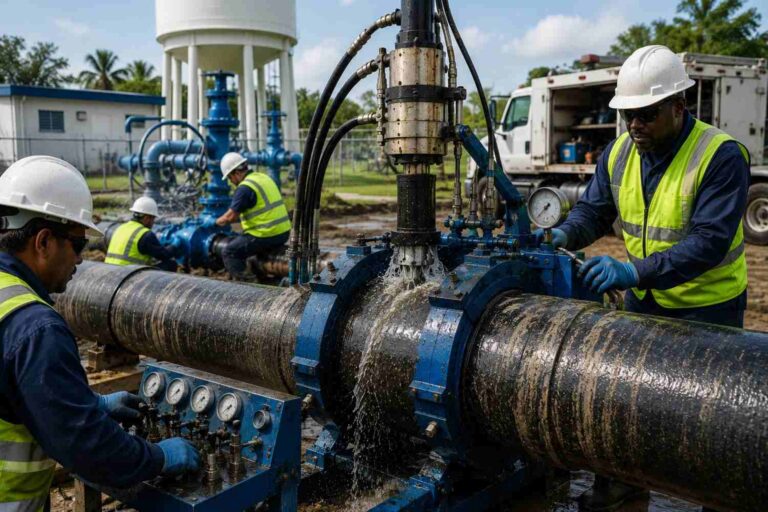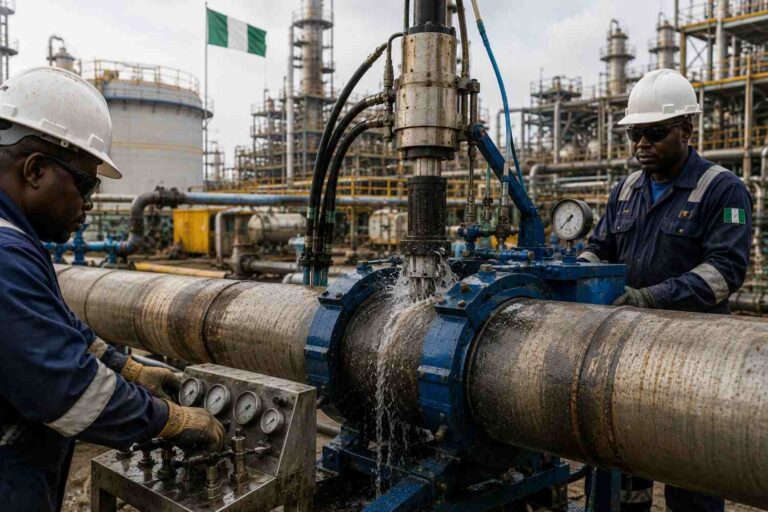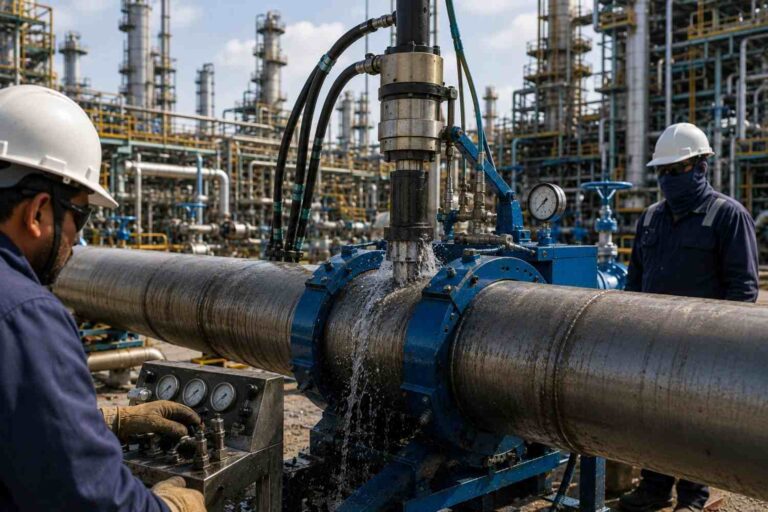

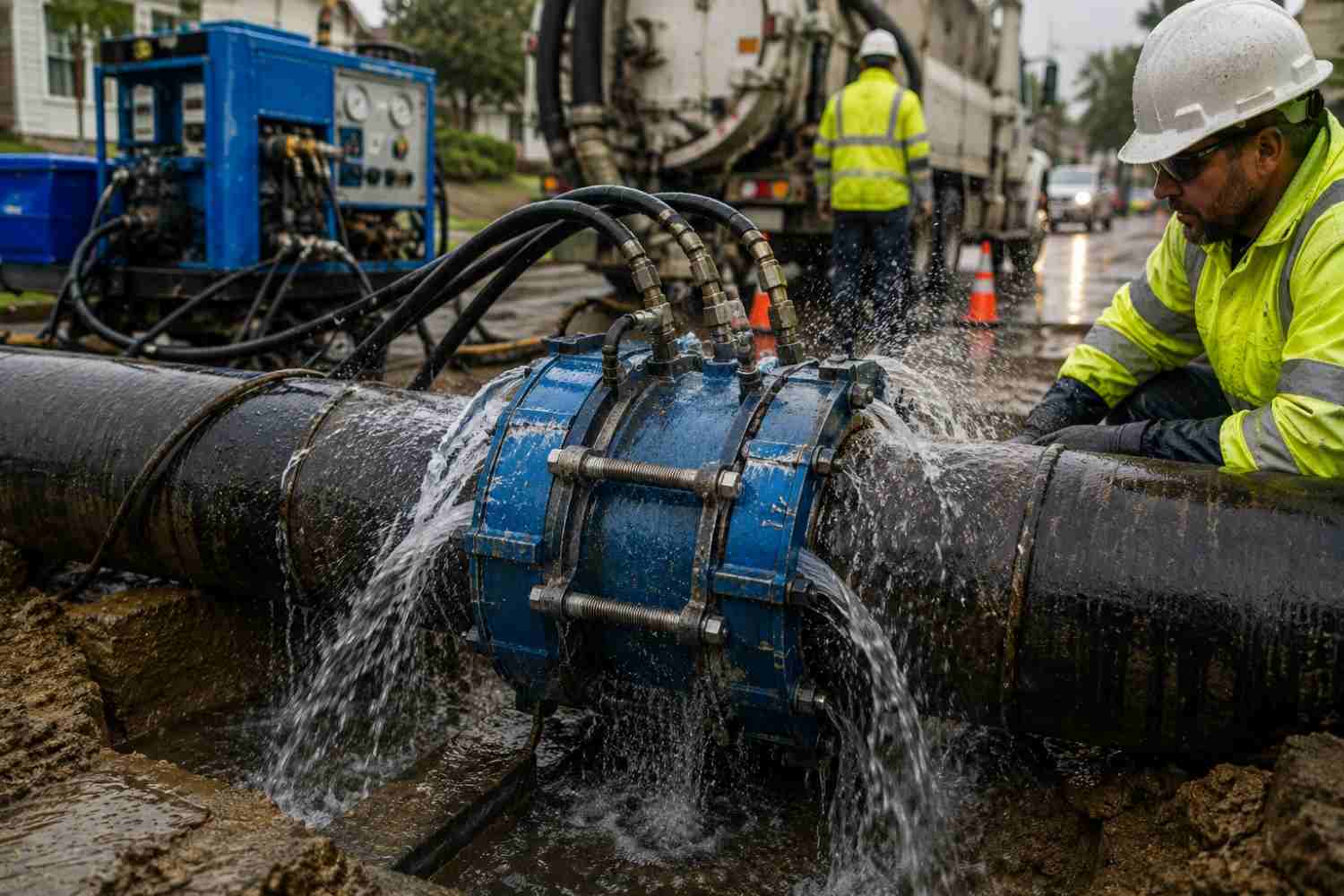
Water utilities are responsible for delivering uninterrupted water supply to residential communities, commercial facilities, hospitals, industrial operations, and municipal infrastructure. Even a short pipeline shutdown can disrupt thousands of users and create major operational challenges.
When repairs, valve replacements, pipeline modifications, or emergency maintenance are required, shutting down the entire water network is often not practical. This is why many operators rely on line stopping for live pipeline repairs.
Line stopping allows water utilities to isolate specific sections of active pipelines while keeping the rest of the network operational. This helps utilities perform maintenance without draining pipelines or disrupting water supply.
What Is Line Stopping?
Line stopping is a temporary pipeline isolation method used to block flow in a specific section of an active pipeline.
The process typically involves:
- Installing a fitting on the live pipeline
- Performing a hot tap
- Inserting a line stop plugging head
- Isolating the required pipeline section
- Completing maintenance work
- Restoring normal operations
This method allows utilities to repair pipelines without shutting down entire distribution systems.
Why Water Utilities Prefer Line Stopping
1. Prevents Water Supply Interruptions
Water utilities serve thousands or even millions of customers.
Shutting down major pipelines can affect:
- Homes
- Hospitals
- Schools
- Commercial buildings
- Industrial users
- Municipal infrastructure
Line stopping helps maintain continuous water supply during repairs.
2. Reduces Water Loss
Traditional repairs often require draining large pipeline sections.
This can waste significant amounts of treated water.
Line stopping minimizes unnecessary water loss during maintenance activities.
3. Avoids Large-Scale Shutdown Planning
Traditional shutdowns often require:
- Customer notifications
- Regulatory coordination
- Service planning
- Emergency backup systems
Line stopping helps utilities avoid complex shutdown logistics.
4. Supports Emergency Repairs
Unexpected leaks, valve failures, and damaged pipeline sections require fast solutions.
Line stopping allows maintenance teams to isolate damaged sections quickly.
5. Works on Large Water Networks
Water systems often include:
- Transmission mains
- Distribution networks
- Pump stations
- Treatment facilities
- Storage systems
Line stopping helps maintain these complex systems without widespread disruptions.
Common Applications in Water Utilities
Utilities commonly use line stopping for:
- Valve replacements
- Pipeline repairs
- New service connections
- Network upgrades
- Meter installations
- Emergency leak repairs
- Pipeline modifications
How Line Stopping Works With Hot Tapping
In many projects, line stopping is paired with hot tapping.
Hot tapping creates access to the live pipeline.
Line stopping then isolates the required section.
Together, these methods allow utilities to complete repairs without full shutdowns.
Benefits of Line Stopping for Water Utilities
Using line stopping for live pipeline repairs helps utilities:
- Maintain uninterrupted service
- Reduce downtime
- Lower repair costs
- Improve maintenance efficiency
- Reduce water waste
- Avoid major shutdowns
Challenges Utilities Face Without Line Stopping
Without line stopping, utilities may face:
- Major service interruptions
- Customer complaints
- Lost water resources
- Longer repair times
- Higher operational costs
This is why many modern utilities rely on live pipeline repair solutions.
How PTS Group Supports Water Utilities
PTS Group provides specialized pipeline intervention services for water utilities, including:
- Hot Tapping
- Line Stopping
- Mechanical Folding Head Services
- Pipe Freezing
- Cold Cutting
- Uni-Valve® Services
As a UK-based pipeline intervention company, PTS Group helps utilities maintain critical infrastructure without unnecessary shutdowns.
Conclusion
Water utilities cannot afford long service interruptions.
That’s why line stopping for live pipeline repairs has become an essential maintenance solution for modern water networks.
It helps operators repair pipelines, replace valves, and upgrade infrastructure while keeping water flowing to customers.