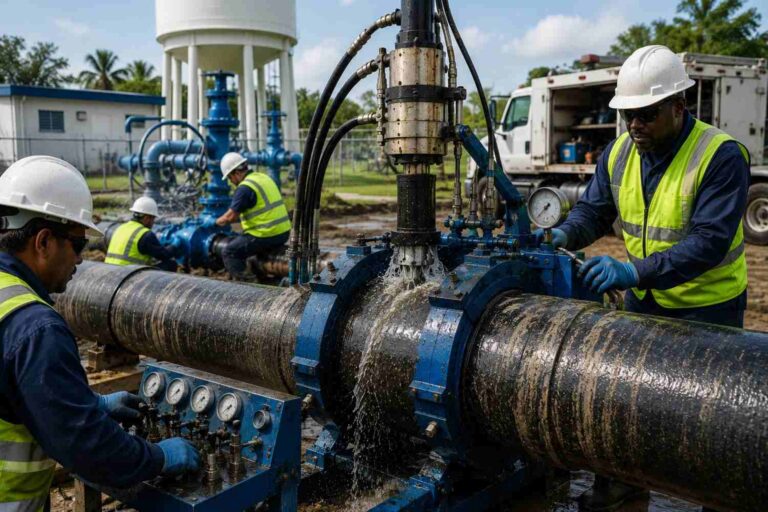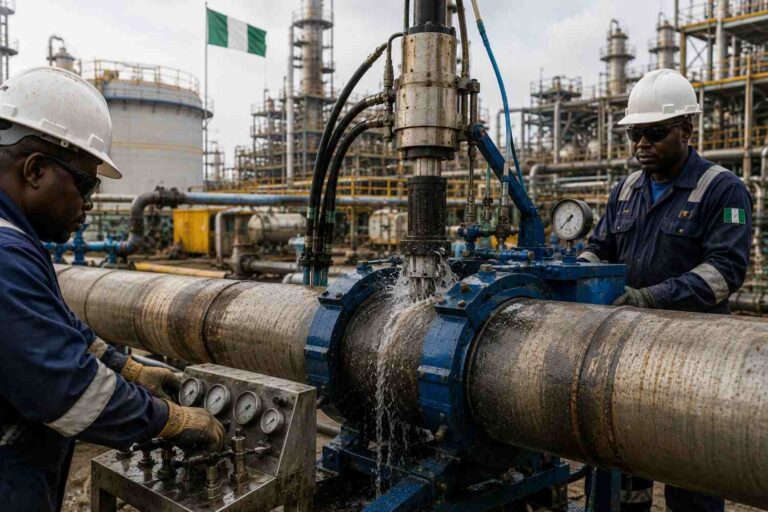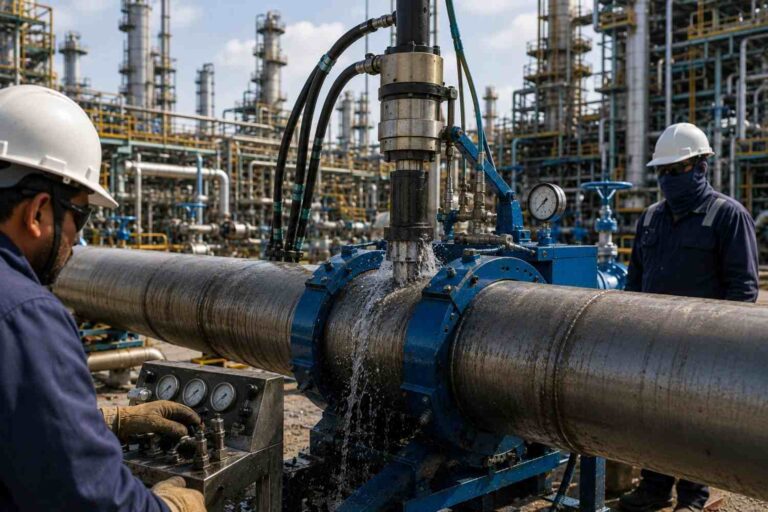

Pipeline maintenance in the oil and gas industry often presents a major challenge—how do you isolate a section of pipeline for repairs or modifications without shutting down operations?
In many cases, draining the system or shutting down production is expensive, time-consuming, and operationally disruptive. This is where Pipe Freezing in Oil and Gas becomes an effective solution.
Pipe freezing creates a temporary ice plug inside a pipeline, allowing maintenance teams to safely isolate sections of liquid-filled pipelines without draining systems, installing permanent fittings, or causing unnecessary downtime.
This guide explains how Pipe Freezing in Oil and Gas works, where it is used, its limitations, and why it has become an important solution for modern pipeline maintenance.
What Is Pipe Freezing?
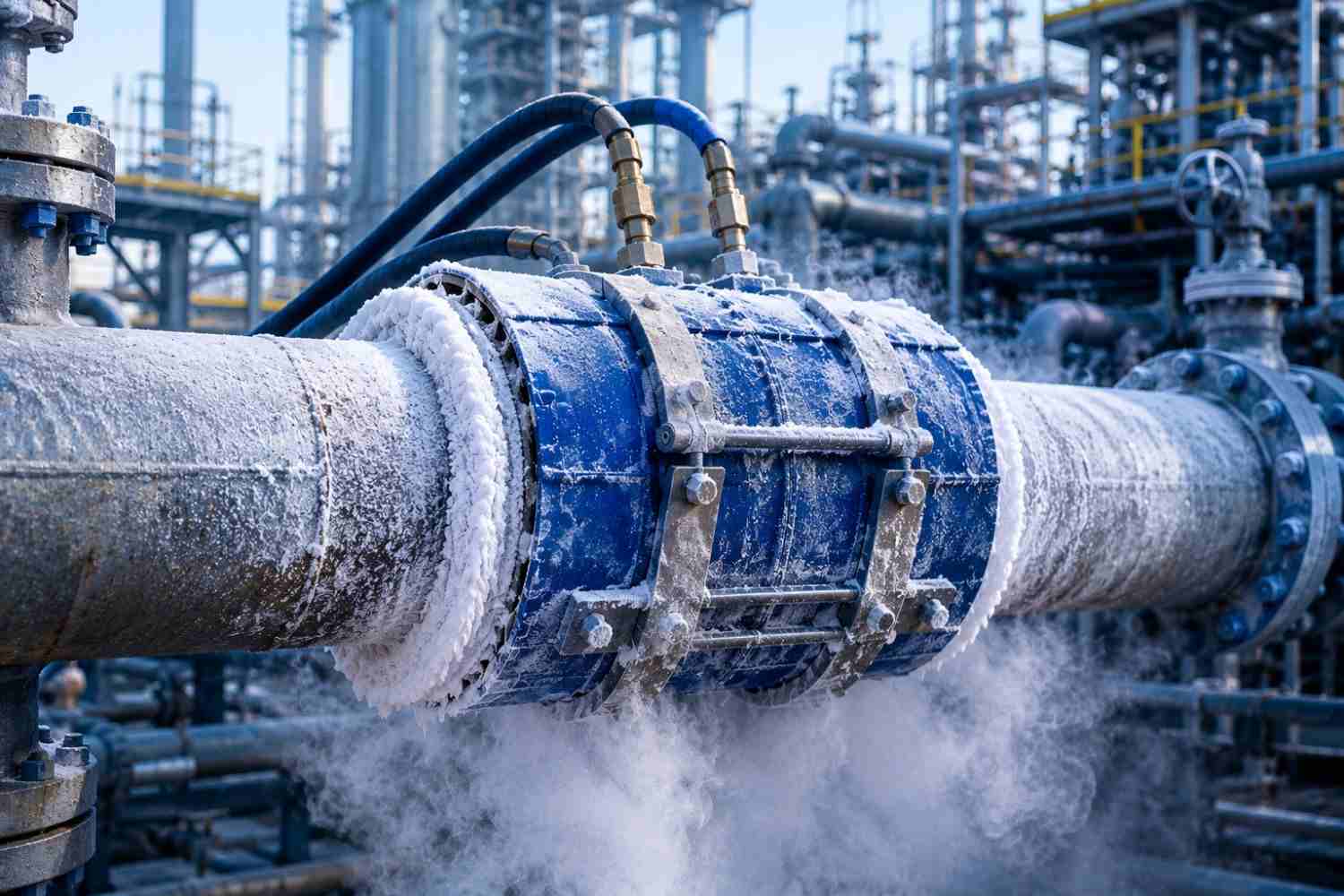
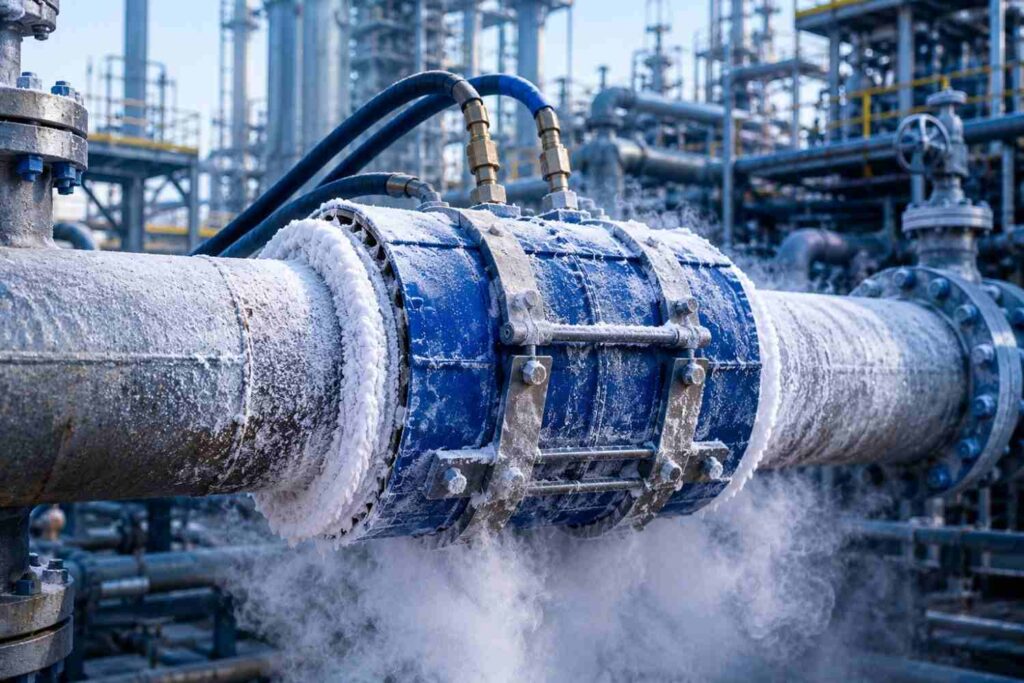
Pipe Freezing in Oil and Gas is a temporary pipeline isolation technique that uses cryogenic cooling to freeze the liquid inside a pipeline.
The process typically involves:
- Installing a freezing jacket around the pipe
- Introducing liquid nitrogen or CO2 refrigerant
- Lowering pipe temperature
- Creating a temporary ice plug
- Isolating the downstream pipeline section
Once maintenance work is complete, the frozen section naturally thaws and normal flow resumes.
This method requires no permanent pipeline modifications and leaves no lasting changes to the system.
How Pipe Freezing Works
The process typically follows several steps:
Engineering Assessment
Engineers evaluate:
- Pipe material
- Wall thickness
- Fluid type
- Pressure conditions
- Freeze duration requirements
This helps determine whether Pipe Freezing in Oil and Gas is suitable for the application.
Site Preparation
The pipe is cleaned and prepared for freezing equipment installation.
Freezing Jacket Installation
A cryogenic jacket is installed around the pipe.
Freeze Formation
Liquid nitrogen or CO2 is introduced to create the ice plug.
Isolation Verification
The freeze plug is tested before maintenance begins.
Maintenance Work
Teams perform repairs, valve replacements, or modifications.
Thawing Process
Once work is complete, the system is returned to normal operation.
Where Pipe Freezing Is Used in Oil & Gas
Pipe Freezing in Oil and Gas is commonly used in:
Refineries
For cooling water systems and maintenance work.
LNG Facilities
Used for utility and water systems.
Gas Processing Plants
Supports maintenance on liquid-filled systems.
Storage Terminals
Used for water and utility pipeline isolation.
Onshore Production Facilities
Supports maintenance without disrupting production.
What Fluids Can Be Frozen?
Not all fluids are suitable for pipe freezing.
Suitable Fluids:
- Water
- Cooling water
- Fire water
Generally Not Suitable:
- Gas pipelines
- Certain heavy hydrocarbons
- Fluids with unstable freezing characteristics
A proper engineering review is critical before selecting Pipe Freezing in Oil and Gas as the isolation method.
Pipe Freezing vs Hot Tapping and Line Stopping
All three methods help avoid shutdowns, but they serve different purposes.
Pipe Freezing
Best for liquid-filled systems where temporary isolation is needed.
Hot Tapping
Used to create new live pipeline connections.
Line Stopping
Used to temporarily isolate active pipelines while maintaining flow.
Experienced contractors often evaluate all three options before selecting the best solution.
Safety Considerations
Safety is critical when performing Pipe Freezing in Oil and Gas.
Important considerations include:
- Thermal stress management
- Pressure monitoring
- Cryogen handling safety
- Atmospheric monitoring
- Proper engineering review
- Emergency response planning
Proper planning helps reduce operational risks.
Benefits of Pipe Freezing
Using Pipe Freezing in Oil and Gas offers several advantages:
- No shutdown required
- No draining required
- Temporary isolation solution
- Minimal operational disruption
- No permanent pipeline changes
- Faster maintenance execution
How PTS Group Supports Oil & Gas Operators
PTS Group provides specialized pipeline intervention services including:
- Pipe Freezing
- Hot Tapping
- Line Stopping
- Cold Cutting
- Uni-Valve® Services
As a UK-based pipeline intervention company, PTS Group helps oil and gas operators perform maintenance work while minimizing operational downtime.
Conclusion
Pipe Freezing in Oil and Gas has become an important solution for facilities that need temporary pipeline isolation without costly shutdowns.
When properly engineered and executed, it offers a safe, efficient, and reversible maintenance solution for liquid-filled systems.
PTS Group helps operators choose the right isolation method based on their pipeline conditions and operational requirements.