
Pipeline maintenance without service interruption is a major issue in the oil and gas sector, water supply, and chemical processing, making line stop procedures for different pipeline systems an essential solution. Line stopping (also known as flow stopping) allows engineers to isolate a specific section of the pipeline while keeping the rest of the system fully operational. This method minimizes downtime, reduces operational losses, and ensures that repairs or modifications can be carried out safely without interrupting ongoing processes, even under live operating conditions.
In this blog, we will discuss the development of line stop processes, the step-by-step process, the application of the process in various industries, safety measures, and innovations
What is Line Stopping?
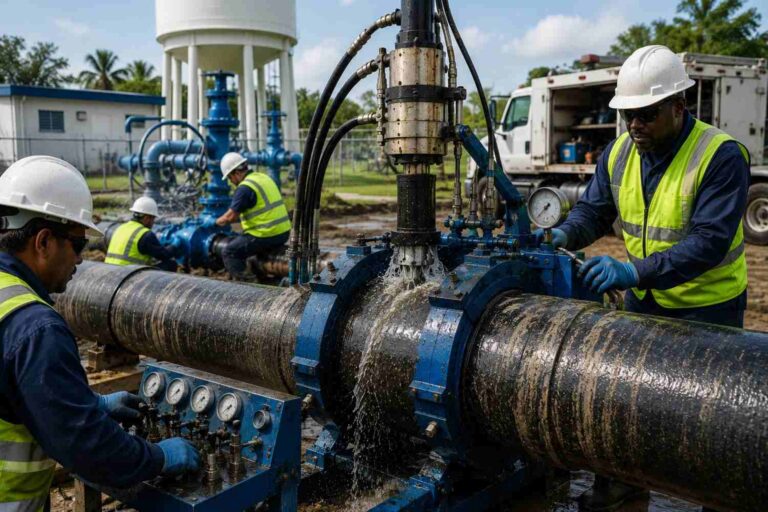
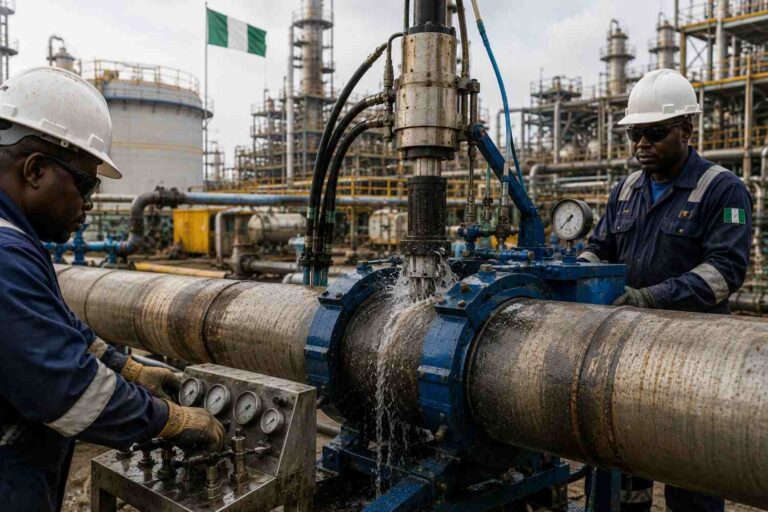
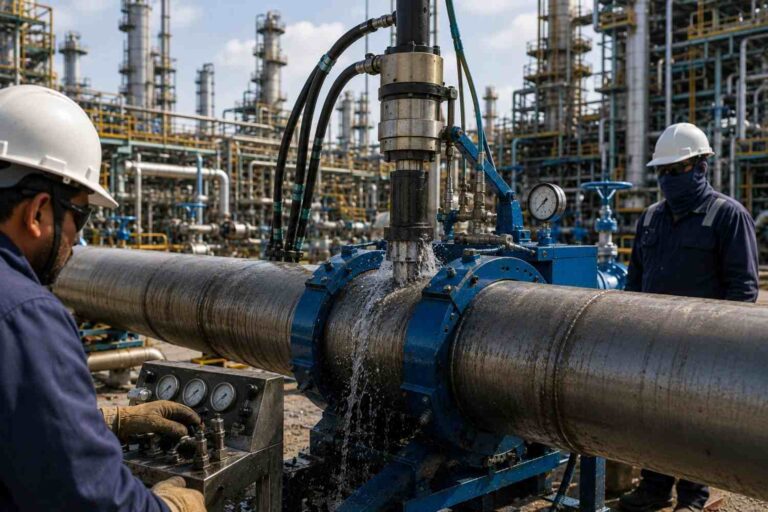
Line stopping is a procedure that entails the temporary blockage of a live pipeline to halt the flow of a certain section without the complete closure of the system. The pipe is made hot, and a hot tap is set into the pipe, and a plugging head (stop head)is inserted and blown to form a secure seal. This allows you to do maintenance work such as changing a valve, tie-ins, or rerouting, and flow bypasses the isolated part.
Key Benefits:
- Keeps the service running.
- Cuts downtime and costs.
- Isolates hazards on the spot, and hence, safety increases.
- Let’s you maintain it at the right spot.
How Line Stopping Differs from Other Pipeline Isolation Techniques
Not all pipeline isolation techniques are created equal, and understanding how line stopping differs from other pipeline isolation techniques is essential for choosing the right method. While pipe freezing creates a temporary ice plug and hot tapping simply adds a branch connection, the line stop method is unique in that it introduces a mechanical plugging head directly into the live pipe bore—providing a robust, pressure-rated isolation that can be maintained for extended periods.
Unlike valve-based isolation, which depends on the condition of existing inline valves (which may be aged, corroded, or absent entirely), the line stop method establishes its own isolation point exactly where it is needed, offering greater reliability, flexibility, and control during pipeline maintenance or modification.
This makes it the preferred pipeline isolation technique in systems where existing valves are unreliable or inaccessible, and where service continuity is non-negotiable. For operators comparing isolation options, the line stop method offers a controllable, reversible, and structurally reliable solution that valve operation and bypass alone cannot match.
The Brief History of Line Stopping
In the mid-20th century, as pipeline networks were expanding at a rapid pace, businesses required a less expensive means to keep the lights on rather than to cut the power to everything. There was a crude early line stopping–rough plugs having been used after a depression of some sort had been made.
In the long run, people invented hydraulic folding plugs, hot-tapping exercises, and fittings. Smart materials and digital monitoring, even robots, are employed by line stops today to conduct safer, slicker operations.
Step-by-step Line Stop Process
Understanding the line stop method in full detail helps project engineers, HSE leads, and asset managers plan effectively. Each step in the process is interdependent — a poorly executed hot tap, for example, directly compromises the integrity of the plugging head insertion that follows.
The pipeline isolation technique works best when the full sequence is engineered in advance, with pipe material, operating pressure, fluid type, and access constraints all factored into the methodology before equipment is mobilised.
PTS engineers conduct a detailed pre-job engineering review for every line stop operation to confirm that the selected plugging head type, fitting configuration, and bypass arrangement are matched precisely to the pipeline conditions.
The line stop process can be reduced to five key steps:
| Step | Description |
| Install Line Stop Tee & Valve | Install a special fitting, including a valve to the live line (weld or bolt). |
| Use a hot-tapping rig | Drill in the pressurized pipe and slice a piece of the wall without leaking. |
| Insert Plugging Head | Slide the stop head up the valve and increase the size to close the inside. |
| human | Do repairs, change valves, or do tie-ins when that part is out of the way; a bypass can keep the flow on. |
| Restore Flow | Pull the plug out, close the valve, and drop the completion plug. Flow is back on the main line. |
This will keep things going as you go about your business in an effective manner.
Specialized Equipment
The process of line stopping requires several tools:
- Hot Tapping Machine – drills into live lines safely.
- Line Stop Fittings (Tee and Valve) – provide you with a point where you can fit plugs.
- Plugging Heads:
- Folding-head plugs – small, and then inflate internally.
- Pivoting plugs – good, rigid, and high-pressure.
- Inflatable plugs – rubber bladders for low-pressure or sewer lines.
- Folding-head plugs – small, and then inflate internally.
- Bypass Systems – pumps or temporary lines that cause a diversion of flow.
These and all the other gearlets allow line stops on pipes between 1/2 and 84 inches in diameter, of steel, ductile iron, PVC, or HDPE.
Selecting the Right Line Stop Method for Your Pipeline
Choosing the correct line stop method is not a one-size-fits-all decision. Several variables determine which approach and equipment configuration is appropriate for a given job. Pipe diameter is the most obvious factor — while small-bore systems (½ inch to 4 inches) can typically be addressed with compact folding-head plugs and standard hot tap fittings, large-diameter transmission mains (24 inches and above) require heavy-duty pivoting plugs, larger line stop tees, and significantly more powerful hydraulic drive units.
Fluid type is equally important. A line stop method applied to a natural gas distribution main demands different safety protocols, fitting materials, and plug designs compared to one applied to a treated water main or an acid chemical line. Pipe material also plays a role — steel mains tolerate the heat input of a welded line stop tee, while HDPE or PVC mains require mechanical (bolted) fittings to avoid thermal damage to the pipe wall.
Operating pressure is another critical selector. Standard line stop fittings and plugging heads are typically rated to 300 psi, but high-pressure transmission lines in the oil and gas sector may require engineered fittings rated to 1,440 psi or beyond. Selecting the right pipeline isolation technique at the planning stage avoids costly re-mobilisations and, more importantly, prevents unsafe situations arising during execution.
Occupational Safety and Health
It is not a joke to work on live, pressurized lines: it requires high safety measures:
- Pre-job Risk Assessment – check the pipe, the fluid, and the pressure.
- PPE – face mask, gloves, respirator, the entire package.
- Monitoring – observe pressure and flow.
- Emergency Prep – prepare evacuation and shutdown plans in case of a plug failure.
- Reg Standards – remain in compliance with OSHA, ANSI, ASME B31.3 (Process Piping), and API 1104 (Pipeline Welding).
These rules ensure that workers are safe, that regulations are met, and that the environment is not ruined.
Industrial Applications
Line stopping is indicated in a group of sectors:
| Application Example | Industry |
| Natural gas pipe maintenance with tandem stops ensures that customers are not left out. | Oil & Gas |
| Install a new water main without disconnecting the neighbors — use inflatable sewer plugs to protect sewer lines. | Water and Sewer |
| Close up dangerous lines (acids, solvents) using a double-block stop and inerting. | Chemical |
| Temporarily shut off steam or chilled water lines to replace equipment. | Power & HVAC |
Across all of these sectors, the line stop method delivers one overriding advantage: the ability to perform precise, surgical interventions on a live pipeline network without disrupting the broader system.
In water utilities, this translates directly to protecting supply to residential and commercial customers during main replacements or meter installations. In chemical processing, it means dangerous process lines carrying acids, solvents, or reactive fluids can be isolated without the costly and environmentally sensitive process of draining, flushing, and purging entire line sections.
In oil and gas, tandem line stops — where two plugging heads are deployed simultaneously to create a double-block isolation — provide the redundancy that high-consequence pipeline environments demand. Regardless of sector, the pipeline isolation technique must be selected, engineered, and executed by qualified specialists with both the technical knowledge and the operational experience to manage the risks inherent in working on live, pressurised systems.
Line Stop Technology Innovations
Line stopping is being made safer and cooler, with modern variations:
- Real-Time Monitoring – IoT sensors monitor pressure and leaks.
- Remote / Robotic Tools – human risk is eliminated through automation.
- Composite Repairs – carbon-fiber wraps increase the strength of sections rapidly.
- Miniaturized and Tandem Stops – additional choices in narrow and complicated systems.
These upgrades enhance reliability, reduce risk, and ensure that line stopping keeps up with the requirements of the industry.
When to Call a Specialist for a Line Stop Operation
While the principles of the line stop method are well understood, the execution demands a combination of specialized equipment, certified personnel, and rigorous engineering that goes well beyond general pipeline maintenance capability. There are several scenarios where engaging a specialist line stop contractor is not just advisable — it is essential.
When pipeline pressure exceeds 150 psi, the consequences of plug failure or fitting leak become severe enough to require engineered solutions and experienced operators. When the fluid being carried is hazardous — gas, acid, hydrocarbon, or steam — the risk profile of the operation demands specialist HSE management and equipment rated for the specific medium. When access is restricted, pipes are deeply buried, or the system topology is complex (multiple branches, closely spaced fittings, or ageing infrastructure with unknown wall thickness), standard approaches may not apply without modification.
PTS brings decades of specialist experience in pipeline isolation techniques across the water, oil and gas, chemical, and power sectors. Our line stop operations are backed by full engineering assessment, purpose-designed equipment, certified technicians, and documented quality and safety management systems — giving asset owners and operators the confidence that the job will be done right, first time, every time. Whether you need a single-point isolation on a 4-inch water main or a tandem double-block stop on a high-pressure gas transmission line, PTS has the line stop method capability to match your requirements.
Conclusion
The line stopping is a trick that is used to maintain the pipeline safely, efficiently, and at a reasonable cost across the board. It keeps the infrastructure humming by allowing you to repair what is broken without closing the whole infrastructure. The future of line stopping is now safer and more efficient than ever with smarter monitoring, smarter robots, and new materials.