| End Client | Dubai Municipality |
| Executed By | PTS Group |
| Project Location | United Arab Emirates |
Project Overview
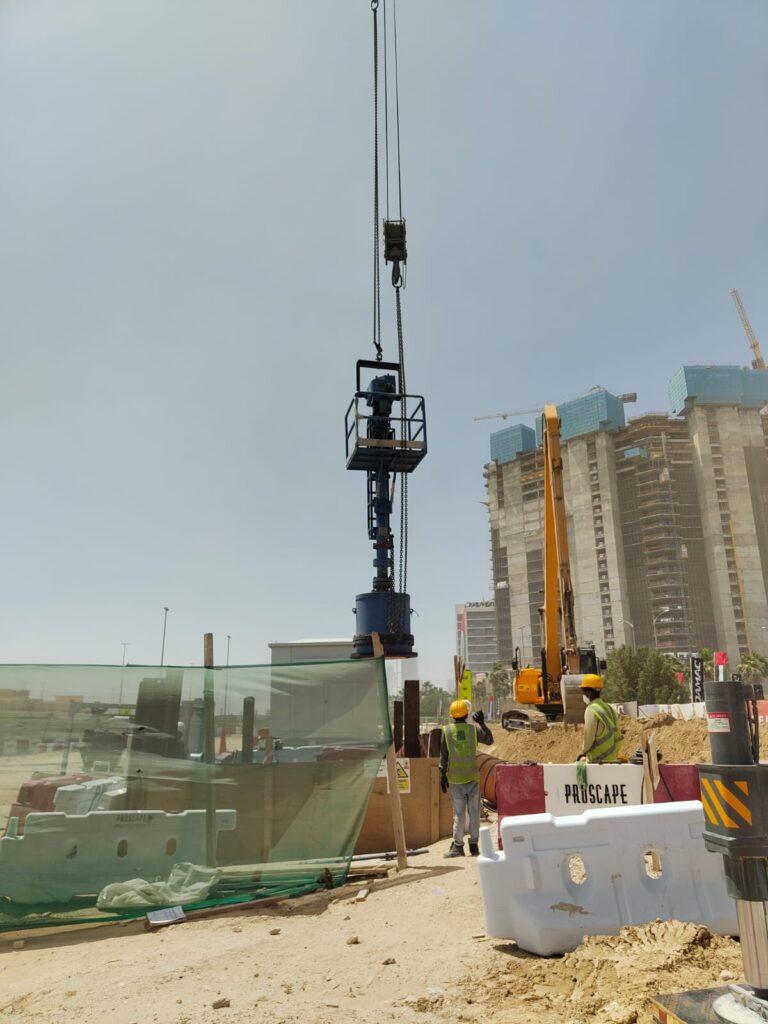
PTS Group successfully executed the diversion of an operational 32” 150# sewage transmission line using a Double Line Stop with Temporary 24” Bypass Method, enabling uninterrupted sewage flow throughout construction activities.
This project represents a major technological milestone as PTS became the first company in the Middle East to successfully perform line stop intervention on a GRP (Glass Reinforced Plastic) pipeline using an articulating line stop head.
The project required complete isolation of a live sewage pipeline segment without shutdown of the network, while maintaining service continuity and ensuring safe execution under operating conditions.
Project Data
| Parameter | Details |
|---|---|
| Pipeline OD | 32” |
| Pressure Rating | 150# |
| Pipeline Material | GRP (Glass Reinforced Plastic) |
| Service | Sewage |
| Operating Pressure | 2 bar |
| Operating Temperature | Ambient |
| Isolation Method | Double Line Stop |
| Temporary Bypass Size | 24” |
Scope of Supply
PTS engineered, supplied and executed the following:
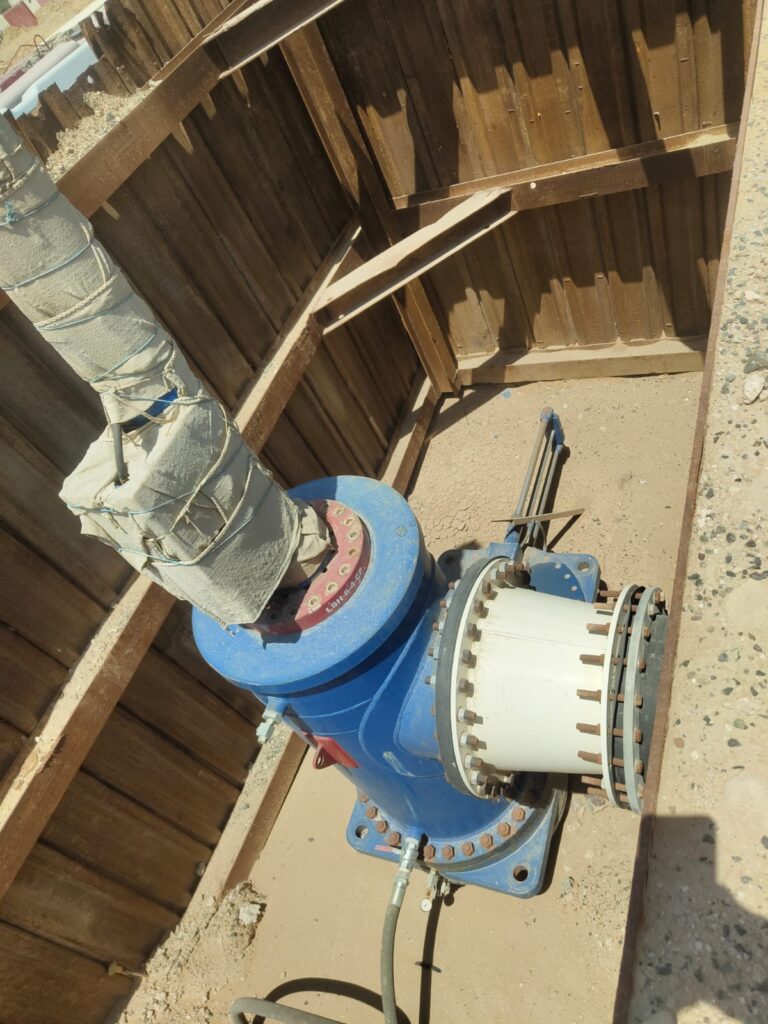
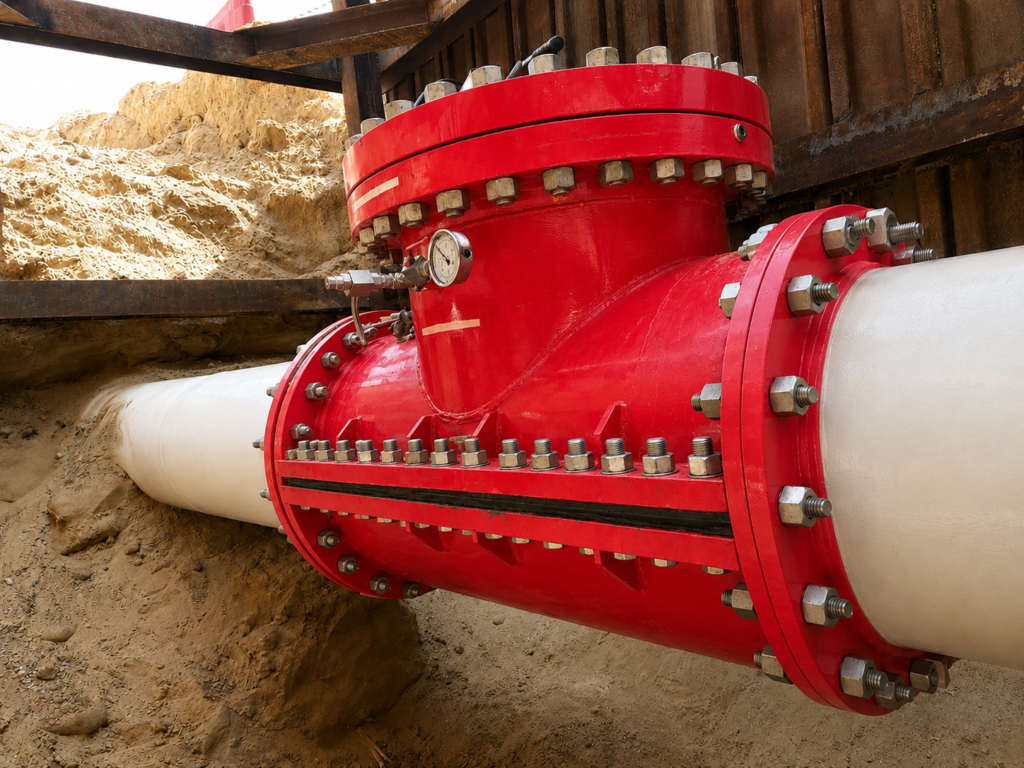
- 32” 150# Specialized Mechanical Split Tee – 02 Nos
- 2” 150# Mechanical Equalization Fittings – 04 Nos
Main Engineering Challenge
Challenge 1 – Live Intervention on GRP Pipeline (No In-Service Welding Possible)
Unlike conventional steel pipelines, GRP pipelines do not permit in-service welding, which eliminates the possibility of using standard welded split tees and conventional line stop arrangements.
This created a significant engineering challenge because the isolation and hot tapping activities had to be performed entirely under live operating conditions while maintaining structural integrity of the GRP line.
To overcome this limitation, PTS designed and developed a specialized mechanical line stop tee system and associated mechanical fittings specifically for GRP application, eliminating the need for any welding on the live pipeline.
The solution included:
- Engineered mechanical split tee arrangement
- Controlled load distribution over GRP surface
- Specialized sealing system
- Mechanical equalization fittings
- Custom interface for articulating line stop heads
This innovative approach enabled safe installation and reliable isolation without compromising the integrity of the existing pipeline.
Challenge 2 – Maintaining Continuous Sewage Service
The sewage transmission system could not be taken out of service due to operational requirements.
PTS had to execute:
- Hot tapping under live conditions
- Temporary bypass installation
- Complete flow diversion
- Isolation and diversion activities
All while maintaining continuous sewage conveyance.
Challenge 3 – Long-Term Isolation Requirement
One of the most critical project requirements was that the line stop head remained in an inserted and sealing position for approximately six (6) months during the execution period.
Maintaining reliable isolation over such an extended duration required:
- High sealing integrity
- Stable mechanical restraint
- Continuous monitoring
- Long-term performance validation under operating pressure
PTS successfully maintained zero leakage throughout the entire six-month isolation period until retrieval of the line stop heads, demonstrating the reliability of the engineered mechanical isolation solution for GRP applications.
Execution Methodology
Step 1 – Engineering & Site Assessment
- Pipeline assessment and dimensional verification
- Hydraulic and structural review
- Isolation and bypass engineering
- Development of specialized GRP intervention methodology
Step 2 – Installation of Specialized Mechanical Split Tees
- Installed two 32” 150# mechanical split tees
- Installed four 2” equalization fittings
- Completed hydro test
Step 3 – Hot Tapping Under Live Conditions
- Controlled hot tapping operations executed
- Maintained continuous sewage service
Step 4 – Temporary 24” Bypass Commissioning
- Connected temporary bypass arrangement
- Diverted sewage flow through bypass system
Step 5 – Double Line Stop Installation
- Installed articulating line stop heads
- Established upstream and downstream isolation
- Activated pressure equalization system
Step 6 – Diversion and Restoration
- Existing line section isolated
- diversion works completed
- Line stop heads retrieved
- Final reinstatement and commissioning completed
Key Project Achievements
✔ First successful GRP line stop operation in the Middle East using articulating line stop technology
✔ Developed and deployed specialized mechanical line stop tees for non-weldable GRP pipeline application
✔ Achieved live isolation without in-service welding
✔ Maintained continuous sewage service throughout execution
✔ Successfully operated with line stop heads inserted for approximately six months with zero leakage
✔ Completed pipeline diversion without network shutdown
Benefits Delivered to Client
- Zero interruption to sewage network operations
- Eliminated shutdown requirements
- Reduced environmental and operational risks
- Minimized construction impact
- Demonstrated long-duration live isolation capability on GRP systems
Project Outcome
PTS Group successfully delivered the 32” GRP sewage line diversion using Double Line Stop and 24” bypass methodology under live conditions for Dubai Municipality.
By overcoming the limitation of non-weldable GRP infrastructure through specially engineered mechanical line stop systems, and maintaining leak-free isolation for six months, the project established a new benchmark for advanced pipeline intervention solutions in the Middle East.
This execution demonstrated that even large-diameter GRP sewage pipelines can be safely modified and re-routed without shutdown through innovative mechanical isolation technology.
